Trip coming up? Get an eSIM before you go!


Skopje beyond the statues: the old city hiding in plain sight
By GjirafaTravel ·
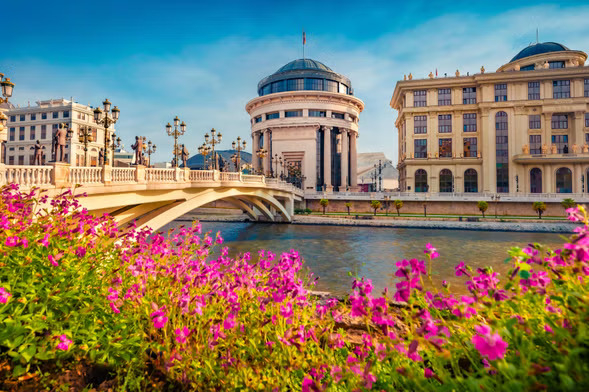
Have you ever seen a clock that stopped more than sixty years ago and never moved again? Skopje has one, and most visitors walk right past it on their way to the giant statues. That's the funny thing about this city: the shiny new centre gets all the photos, while the real story waits a few steps behind it. Here's how to spend one autumn day finding it, from the first breakfast to the last light on the mountain.
Why autumn is the right time for Skopje
The summer heat is gone, the afternoons are still soft and warm, and the city moves at its own pace again. Late October is also the end of pepper season, when families across North Macedonia roast red peppers to make ajvar, the sweet red pepper spread that ends up on every table. One thing to plan around: since the clocks went back on 25 October, it gets dark before five, so this is a day that starts early.
Getting here is the easy part. Our buses leave Prishtina for Skopje almost ten times a day, for a 92 km ride. Coming from Tirana? Our buses make the 236 km trip a few times a day, and from Prizren there's one bus every day for the 108 km ride. Keep your ticket in Apple Wallet and the border stop is one less thing to think about, since it's on your phone even when the signal drops. You'll find every bus to and from the city on our Skopje page.
Morning: start where the clock stopped
Do breakfast the way locals do: a warm piece of burek (flaky pastry with cheese or meat) from a bakery and a glass of drinking yogurt next to it. Then walk to the bottom end of Macedonia Street, to the Old Railway Station.
At 5:17 in the morning on 26 July 1963, an earthquake destroyed most of Skopje in a few seconds. The station clock stopped at that exact minute, and it still shows 5:17 today. The city chose to keep the broken half of the building as it was, as a memorial, and inside is the City Museum, with old photos of the Skopje that disappeared that morning. Good to know: the museum is closed on Mondays.
Now walk up Macedonia Street towards the river. The Mother Teresa Memorial House is on this same street, so you don't need a separate trip for it. She was born in Skopje in 1910, into an Albanian family, and many Albanian visitors make this their first stop. When you reach the Stone Bridge, cross it and turn around on the far side: behind you the new center, in front of you domes and minarets. That one view explains the whole city.
Late morning: the Čaršija most people rush through
The Old Bazaar, called the Čaršija, starts right after the bridge. Most visitors walk the main street, buy a magnet and leave. Slow down and look for these three things instead. You'll hear Albanian, Macedonian and Turkish around you, often in the same shop.
Holy Saviour Church: take the steps down
From the outside, the Holy Saviour Church (Sveti Spas) looks like nothing special. That was the point. Under Ottoman rule a church could not be taller than a mosque, so this one was dug into the ground, and you walk down steps to get in. Inside is a huge screen of carved walnut wood, made between 1819 and 1824 by master carvers from the Debar area. Here's the fun part: the carvers put little figures of themselves into their work. Look for them in one corner, on the south side. In the small courtyard is the tomb of Goce Delčev, a national hero of North Macedonia. Cover your shoulders, and keep your voice low.
The old inns: tea where traders once slept
Hundreds of years ago, merchants arrived here with horses and goods and stayed in big square inns built around a courtyard. Three still stand. Kapan An is the first one you reach from the bridge side, and its courtyard is now full of small tea rooms. Sit down for a tea there. Suli An has two floors: guests slept upstairs and their animals stayed below. Today art students study there, and it holds a small museum about the bazaar's past. Its name comes from a stream that once ran past it.
Bit Pazar: follow the red peppers
At the far end of the Čaršija is Bit Pazar, the big open market. Go before lunch, because it's busiest in the morning and quiet by early afternoon. At the end of pepper season you may still see piles of red peppers waiting to become ajvar. For lunch, find a grill house back in the bazaar and do what everyone here does: ask for a small bowl of ajvar next to whatever comes off the grill.
Afternoon: go up while the light lasts
The best view of Skopje is from Mount Vodno, where the big Millennium Cross stands. Get to Sredno Vodno, the halfway point (a city bus climbs there from the centre), and take the cable car up. Three things most people learn too late: the cable car doesn't run on Mondays, it only takes denars (the local money), and in the colder months it stops around five. So go up right after lunch, watch the afternoon light turn gold over the city, and ride down before the last cabin.
Cable car closed? Walk up to the walls of Kale Fortress instead, just above the Čaršija. It's not as high, but you get the domes and minarets of the bazaar right below you.
Evening: the river, the park and a slow dinner
Back in the centre, walk west along the Vardar River to City Park. At the end of October its old trees turn yellow and the paths fill with leaves, and it's where locals go for an evening walk. One honest note: on cold evenings with no wind, when home heating starts, the air in Skopje can feel smoky. If it does, check an air quality app and keep the walk short.
For dinner, go back to the Čaršija and order tavče gravče, beans baked in a clay pot. It's heavy, warm and made for a chilly autumn night.
Got another day? Take the bus to the lake
Skopje is a great first stop before going further. Our buses leave Skopje for Ohrid six times a day, for a 182 km ride through the mountains to the lake. In autumn the lakeside is calm and the summer crowds are gone.
Small tricks for a smooth Skopje day
- Carry denars. The cable car, small bakeries and church tickets often want the local money, not euros or cards.
- Watch out for Mondays. The City Museum and the Vodno cable car are both closed. Make Monday your Čaršija day.
- Start early. It's dark before five now, so plan the mountain for the afternoon, not the evening.
- Do the market in the morning. Bit Pazar is quiet after lunch.
- Dress in layers. Warm afternoons, cold evenings, and it's always colder up on Vodno.
FAQs
Is Skopje worth visiting in autumn?
Yes. The heat is gone, the Čaršija is calmer, and late October is the end of pepper season, when many neighbourhoods smell of roasting peppers. Just plan around the early darkness.
Is one day enough for Skopje?
One full day is enough for the old city, the Čaršija and the view from Vodno. Stay a second day if you want to go on to Ohrid.
Do I need cash in Skopje?
Yes, bring some denars. Bigger places take cards, but the cable car takes denars only, and small bakeries and shops often want cash.
What is closed on Mondays?
The City Museum in the Old Railway Station and the Vodno cable car. The Čaršija, the churches and the market are a better plan for that day.
Do I need a printed bus ticket?
No. Our tickets are digital, and on an iPhone you can keep yours in Apple Wallet, always ready when you need it.
Can I continue from Skopje to Ohrid?
Easily. Our buses leave Skopje for Ohrid six times a day, for a 182 km ride.
Stay connected
You made it all the way to the end, so we think you're ready for this trip! But how will you find your way, share the view, or tell your family you arrived safely? Get our eSIM for North Macedonia and stay online from the moment you step off the bus. And because you read every line, here's a small thank-you from us: use the code BLOG10 when you buy it. See you on the road?