Trip coming up? Get an eSIM before you go!


Why Sofia might be the best weekend trip you haven’t taken yet
By GjirafaTravel ·
Imagine stepping off the bus on a cold November evening and seeing steam rise from a row of taps by the road, while locals wait in line to fill big plastic bottles. It isn't a broken pipe. It's warm spring water, free for anyone, and the city grew up around these springs back in Roman times. Sofia is full of small surprises like this, and most visitors walk right past them. Here's how to find them in one easy weekend.
Why Sofia makes sense this November
In November the city slows down. The summer visitors are gone, the big parks turn yellow and red, and the streets belong to the people who live here. Days are cool and good for walking, but it gets dark around five, so plan the outdoor parts of each day for the morning and early afternoon.
One more nice surprise: since January 2026 Bulgaria uses the euro. If you're coming from Kosovo, Montenegro or anywhere else in the euro area, there's no money to change.
Getting here is the easy part. Our buses leave Skopje for Sofia every day, for a ride of about 240 km to the east. From Prishtina our buses go almost every day, about 350 km, and from Tirana they run a few times a week for a ride of almost 500 km. With digital tickets that work with Apple Wallet, you can travel relaxed, knowing your seat is saved and your ticket is always at hand. You'll find every bus to and from the city on our Sofia page.
Friday evening: arrive hungry, then go see the gold domes
After a long ride, don't hide in the hotel room. Go out and eat. Look for a mehana, a traditional Bulgarian tavern with wooden tables and heavy, warm food. Order kavarma (meat and vegetables cooked slowly in a clay pot) and start with lyutenitsa, a spread of roasted red peppers and tomatoes that will remind you of ajvar.
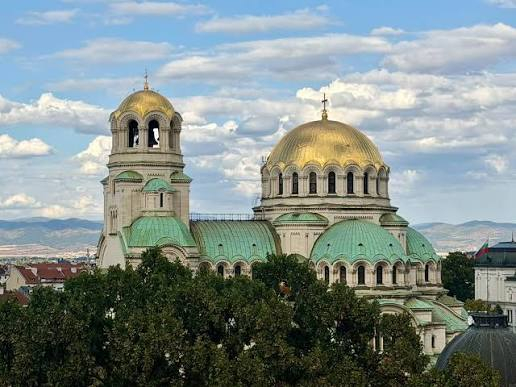
Then walk over to Alexander Nevsky Cathedral. Most people see it at noon, surrounded by tour groups. Come after dark instead, when the square is almost empty and the gold domes glow above you. It takes five minutes and it feels like the whole city is yours.
Saturday morning: follow the steam
Start the day with the free walking tour. The guides wait every morning at 11 in front of the two stone lions at the Palace of Justice, at the top of Vitosha Boulevard. The walk takes about two hours, and at the end you pay what you think it was worth, in cash. It's the quickest way to understand a city that has been Thracian, Roman, Byzantine, Ottoman and communist, sometimes all on the same corner.
Church of St. Petka: look down, not up
In the middle of the busy centre, a tiny medieval church sits below the level of the street, as if the city grew up around it and forgot it was there. That's the Church of St. Petka. Walk down into the underground passage next to it and you'll see how low it really is.
Three faiths in five minutes
A short walk away is the Banya Bashi Mosque, built in the 1500s and the only mosque in Sofia still used for prayer. Right behind it stands the Sofia Synagogue, the biggest in the Balkans, and the Sveta Nedelya Church is a few hundred metres away. Not many capitals let you see all three in one short walk. Cover your shoulders and knees, and wait until prayer time is over before you enter the mosque.
Fill a bottle at the hot springs
Here's the trick most visitors miss: bring an empty water bottle. Next to the mosque, outside the colourful old public baths building (today the Museum of Sofia), a row of taps pours out mineral water at about body temperature, day and night, all year long. Locals come with huge bottles to take home. On a cold November morning you'll see the steam before you see the taps. Have a sip: it's warm, a little salty and completely free.
Saturday afternoon: the park that saves its best for autumn
After lunch, walk south east to Borisova Gradina, the oldest park in Sofia. In November its long paths are covered in leaves, and you share them with joggers, families and people walking their dogs. Pick any path and keep going: the deeper you walk, the quieter it gets. Leave before it gets dark, then head back to the centre for something hot.
If a bakery sells boza, try it. It's a thick drink made from grain, sweet and a little sour at the same time. Bulgarians love it with warm pastry in the morning. Visitors either love it or hate it at the first sip. Either way, you'll have a story.
Sunday: the church that named the city, and where the old statues went
St. Sofia Church and the city under it
Here's a fact that surprises everyone: the city took its name from this church, not the other way round. St. Sofia Church is about 1,500 years old, built in the time of the Byzantine emperor Justinian. Under it there's an underground museum with old Christian tombs and the remains of even older churches. Go in the morning: in the cold months the church closes in the late afternoon, and the museum below is closed on Mondays.
The garden of retired statues
Now for something completely different. The Museum of Socialist Art, a short metro ride east of the centre, is where Sofia sent the statues of the communist years when they were taken down from the streets. In its garden you'll find Lenin, soldiers, workers and the big red star that once stood on top of the Communist Party building. It opens from Tuesday to Sunday, so Sunday morning works perfectly. Walking among dozens of stone faces is strange, a little funny and very good for photos.
Time to go, or keep going
Our buses leave Sofia for Skopje every day, the same 240 km back to the west, so getting home is simple. Going on to Albania? Our buses from Sofia to Tirana run a few times a week, so choose your day before you book the hotel.
Small tricks for an easy weekend in Sofia
Bring an empty bottle. The hot springs are free, and you'll want a sip more than once.
Walk everywhere in the centre. Almost everything in this plan is a short walk apart. You need the metro only for the statue museum.
Watch the clock. It's dark around five, so do parks and outdoor sights first, and keep museums and dinner for later.
Learn a few Cyrillic letters. Street signs are in Cyrillic. The camera in a translation app reads them for you.
Be careful with nodding. In Bulgaria a nod can mean “no” and a shake of the head can mean “yes”. When in doubt, say the word out loud.
Dress in layers. Mornings are cold, afternoons can be mild, and the evening wind finds every gap.
Do's and don'ts
Do: say “blagodarya” (thank you) in shops and cafes. People smile every time.
Do: cover your shoulders and knees in churches, the mosque and the synagogue.
Don't: use the camera flash inside churches.
Don't: leave the museums for a Monday. The underground museum at St. Sofia and the Museum of Socialist Art are both closed that day.
FAQs
Is Sofia worth visiting in November?
Yes. The crowds are gone, the parks are full of autumn colour and the city feels local. Just plan your outdoor walks early, because it gets dark around five.
How many days do I need in Sofia?
Two full days are enough for the centre, the hot springs, a park and a couple of museums. A third day gives you time to slow down.
Do I need cash in Sofia?
Bulgaria has used the euro since January 2026, and cards work in most places. Keep a few coins and small notes for bakeries and for the guide at the end of the free walking tour.
Is the water from the street taps safe to drink?
Locals drink it and take it home every day. It comes out warm and has a mineral taste that may surprise you at first.
Can I see Sofia on foot?
Yes. The old centre, the hot springs, the churches and Borisova Gradina are all within walking distance. Only the Museum of Socialist Art is a short metro ride away.
Do I need a printed bus ticket?
No. Our tickets are digital, and on an iPhone you can keep yours in Apple Wallet, ready whenever you need it.
Stay connected
You made it all the way to the end, so we think you're ready for this trip! But how will you find your way, share the view, or tell your family you arrived safely? Get our eSIM for Bulgaria and stay online from the moment you step off the bus. And because you read every line, here's a small thank-you from us: use the code BLOG10 when you buy it. See you on the road?