Trip coming up? Get an eSIM before you go!


Gjakova: one slow autumn day in Kosovo’s longest bazaar
By GjirafaTravel ·
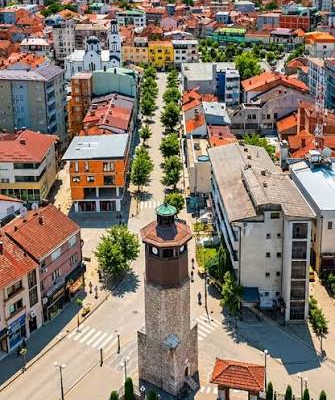
In 1662 an Ottoman traveller passed through Gjakova and wrote that its tiny wooden shops looked like nightingale nests. More than 360 years later, you can still walk that same bazaar: about a kilometre of low wooden shops, small workshops and cafés, with a mosque older than almost everything around it. In November you share it mostly with the people who live here. Here is how to spend one slow autumn day in Gjakova, from the first coffee to the last light on the hill, plus an easy second day if you want more.
Why Gjakova is better once summer is over
Summer in Gjakova is loud and happy. Families are home from abroad, every café table is taken and the music goes on late. Once November comes, the town slows down. Mornings are cold and clear, the hills around town turn brown and gold, and the bazaar goes back to its everyday rhythm. It is the best time to see Gjakova the way locals do.
Just remember that the days are short now. In early November the sun sets before half past four, so plan your outdoor walks for the morning and early afternoon, and keep the evening for food and cafés.
Getting here is the easy part. Our buses leave Prishtina for Gjakova twice a day for the 87 km ride. Coming from Tirana? A few of our buses a day make the trip of about 200 km over the mountains. With digital tickets that work with Apple Wallet, you can travel light and relaxed, with your seat saved and your ticket always on your phone. You will find every bus to and from town on our Gjakova page.
Morning: walk the bazaar from one end to the other
Most visitors jump into the bazaar in the middle and wander back and forth. Try this instead: start at the northern end and walk south through the whole thing. You see it in order, you miss nothing, and you finish right next to lunch.
Start at Sheh Emin’s tekke
A tekke is a meeting house of a Sufi order, a mystical branch of Islam where people gather to pray, sing and learn. Gjakova has several of them, and the tekke of Sheh Emin is the one you can’t miss at the northern end of the bazaar. Admire it from the street and the gate. If you would like to go in, ask first and dress modestly.
Find the cradle makers
As you walk south, look out for small workshops full of wooden baby cradles painted with bright flowers. In Kosovo a cradle (djep) is a classic gift for a new baby, and people come to Gjakova from all over the country to buy one. Look at the ends of each cradle: many carry a short wish like “Me fat” (good luck) and the year it was made. Only a few craftsmen still know how to make them, so if one is working, say hello. Close by you will also see saddle makers with bright leather horse gear and shops selling the white felt hat called qeleshe.
The Hadum Mosque and its quiet graveyard
In the middle of the bazaar stands the Hadum Mosque, the first mosque in Gjakova, built in 1594 and 1595. The town grew up around it: the man who paid for it also paid for some of the first shops. Step inside outside prayer times to see the painted walls and ceiling, then spend a few quiet minutes in the graveyard next to it, where the old stones carry beautiful carved writing.
Lunch: a slow-cooked pot in an old traders’ inn
Near the southern part of the bazaar is Hani i Haraçisë, an old inn where travelling traders once stopped to eat and sleep. Today it is a restaurant with a courtyard and carved wooden balconies, and it is one of the oldest buildings in town.
Order tavë gjakovare, the town’s own version of the baked pot: veal cooked for hours in a tomato sauce, sometimes with melted cheese on top. It is rich, so one pot with bread and a salad is plenty for two. Here early? Ask for paçe, a hot soup locals love in the morning, and exactly what a cold November day needs.
Afternoon: climb Çabrati before the light goes
After lunch, walk west to Çabrati Hill (Kodra e Çabratit). It takes about 30 minutes from the bazaar, and the last part is short but steep. From the top the whole town is below you, with the towers of the Church of St. Paul and St. Peter rising over the roofs. A couple of restaurants up there have outdoor tables, so you can warm your hands on a tea while you watch. Go up by mid-afternoon, enjoy the golden light, and start down while it is still bright.
Still have energy? From the church it is a short walk to the Tabak Bridge, a stone bridge from 1771 over the Erenik River. Cars no longer cross it, so you can stand right in the middle and listen to the water in peace.
Evening: lanterns on the café street
When it gets dark, the long pedestrian street inside the bazaar, Sylejman Hadum Aga, lights up with lanterns and fills with people. Walk it slowly and look at the colourful murals on the walls. For dinner with a view over the old rooftops, try the restaurant of Çarshia e Jupave, a hotel made from a group of restored old houses, and leave room for something sweet.
Got a second day? Take the bus to Peja
Our buses go from Gjakova to Peja twice a day, only 36 km to the north. There, the Rugova Gorge starts about 2 km from the centre, and an autumn walk along its river is the perfect change after a day of stone streets. When it is time to go home, our buses leave Gjakova for Prishtina twice a day.
Small tricks for an easy day in Gjakova
Carry some cash. Kosovo uses the euro. Bigger places take cards, but small workshops, bakeries and cafés often want cash.
Visit the tourist office on a weekday. The small office right by the Hadum Mosque opens Monday to Friday, so pick up a map before the weekend.
Wear shoes with grip. The old stone streets get slippery after rain, and Çabrati is steep.
Dress in layers. Mornings are cold, afternoons can be mild, and the hilltop is always windier than the bazaar.
Do’s and don’ts
Do: cover your shoulders and knees and take off your shoes when you enter a mosque. Women may want a scarf for their hair.
Do: ask before you take photos of craftsmen at work. Most will say yes with a smile.
Don’t: walk into a mosque while people are praying. Wait until the prayer is over.
Don’t: stay on Çabrati Hill until dark. The path down is steep and harder to see at night.
FAQs
Is Gjakova worth visiting in November?
Yes. The bazaar is calm, the hills are full of autumn colour and you see the town’s everyday life. Just plan your walks early, because it gets dark before half past four.
How much time do I need in Gjakova?
One full day is enough for the bazaar, the mosque, lunch at the old inn and Çabrati Hill. Add a second day for a trip to Peja.
Can I see Gjakova on foot?
Yes. The bazaar, the Hadum Mosque, Hani i Haraçisë, Çabrati Hill and the Tabak Bridge are all within walking distance of each other.
What is tavë gjakovare?
It is Gjakova’s own baked pot: veal slow-cooked in a tomato sauce, sometimes topped with melted cheese. It is filling, so it is great for sharing.
Do I need cash in Gjakova?
Bring some euros. Cards work in bigger restaurants and hotels, but small shops, workshops and bakeries often take cash only.
Do I need a printed bus ticket?
No. Our tickets are digital, and on an iPhone you can keep yours in Apple Wallet, ready whenever you need it.
Stay connected
Now you know where to go, what to eat and what to skip. But what happens when you need a map, the next bus or a quick call home? Our eSIM for Kosovo keeps you online from day one, so you never have to search for Wi-Fi. Since you read this far, you get a little extra: type BLOG10 when you buy it. Which place will you visit first?


